Launch offer — valid today only

📄 Digital book in PDF · read it on your phone or print it

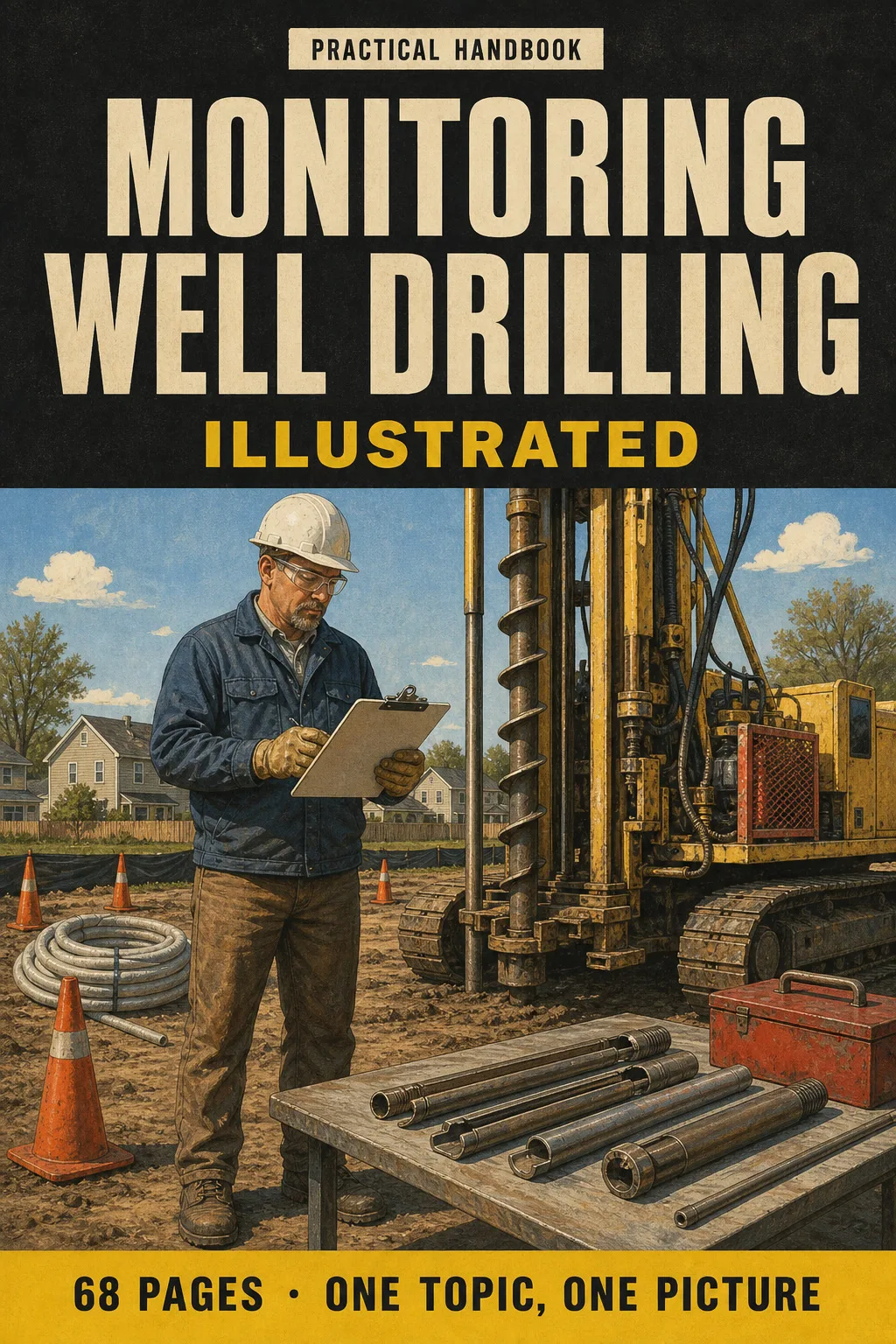
Monitoring Well Drilling in Drawings: Every Step of the Build, From Auger to Grout One Topic on Every Page

Hollow-stem auger, split-spoon and the N value, screen slot, filter pack, bentonite seal, tremie grout, flush-mount completion, development and plugging. Every topic gets its own page: the drawing first, then what you need to remember. 68 illustrated pages.

SHOW ME THE WELL, STEP BY STEP

🔒 Secure checkout · PDF by email · 30-day guarantee

Every topic, its own pageEach step of the build drawn in cross-section, with the explanation right beside it
68 illustrated pages9 parts, from the monitoring well at a glance to the truck checklist
Up-to-date sourcesState well construction codes, ASTM D5092 and U.S. EPA groundwater guidance, with state-specific numbers flagged to check against your state's rule
PDF by emailFormat

Look Inside the Book

Every page has one big drawing and a box with the depths, volumes and steps you need to know:

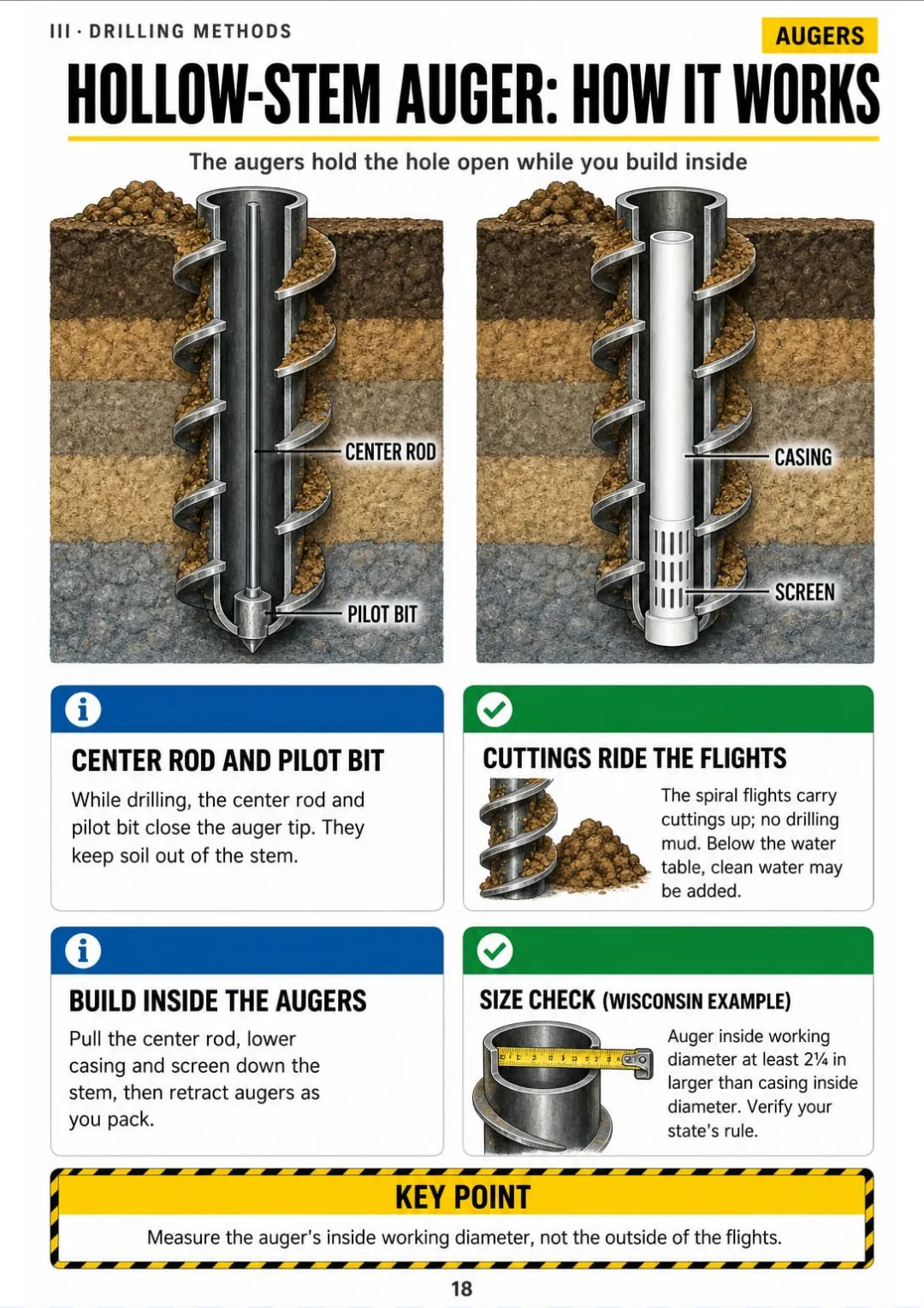
Hollow-stem auger: center rod and pilot bit while drilling, casing set inside the stem.
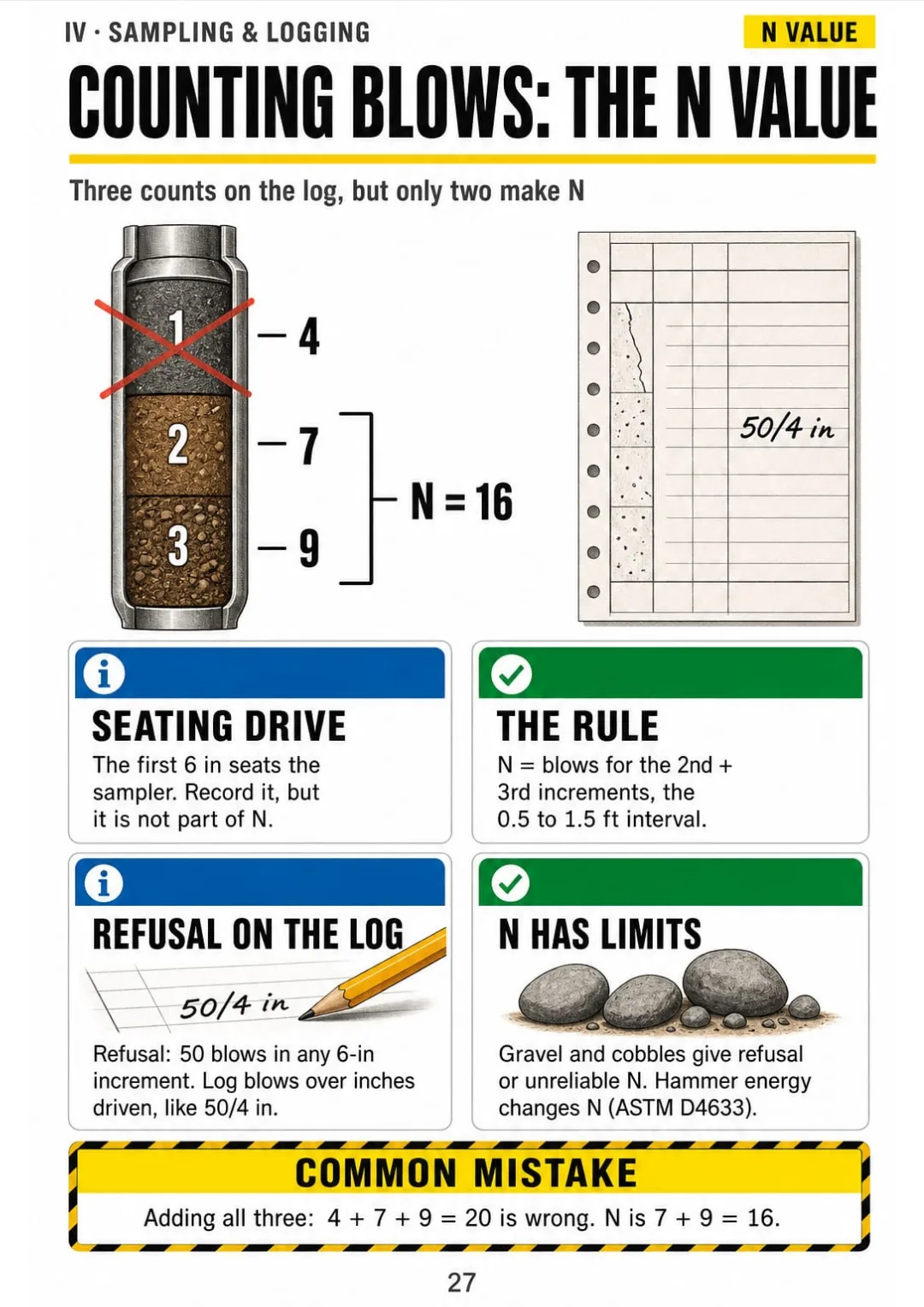
N value: 2nd + 3rd 6-in counts. 4-7-9 → N = 16.
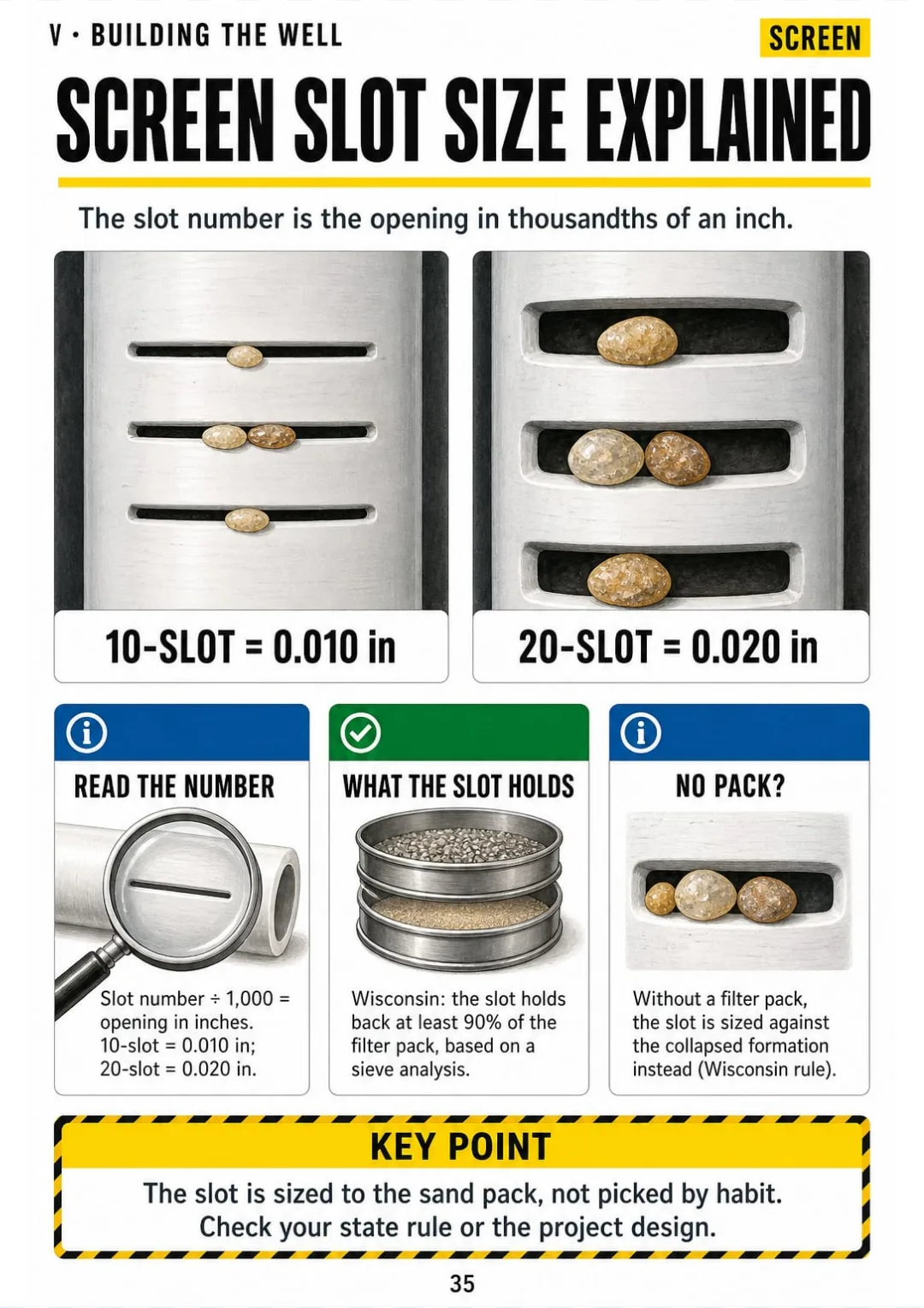
Slot number = thousandths of an inch: 10-slot is 0.010 in, 20-slot is 0.020 in.
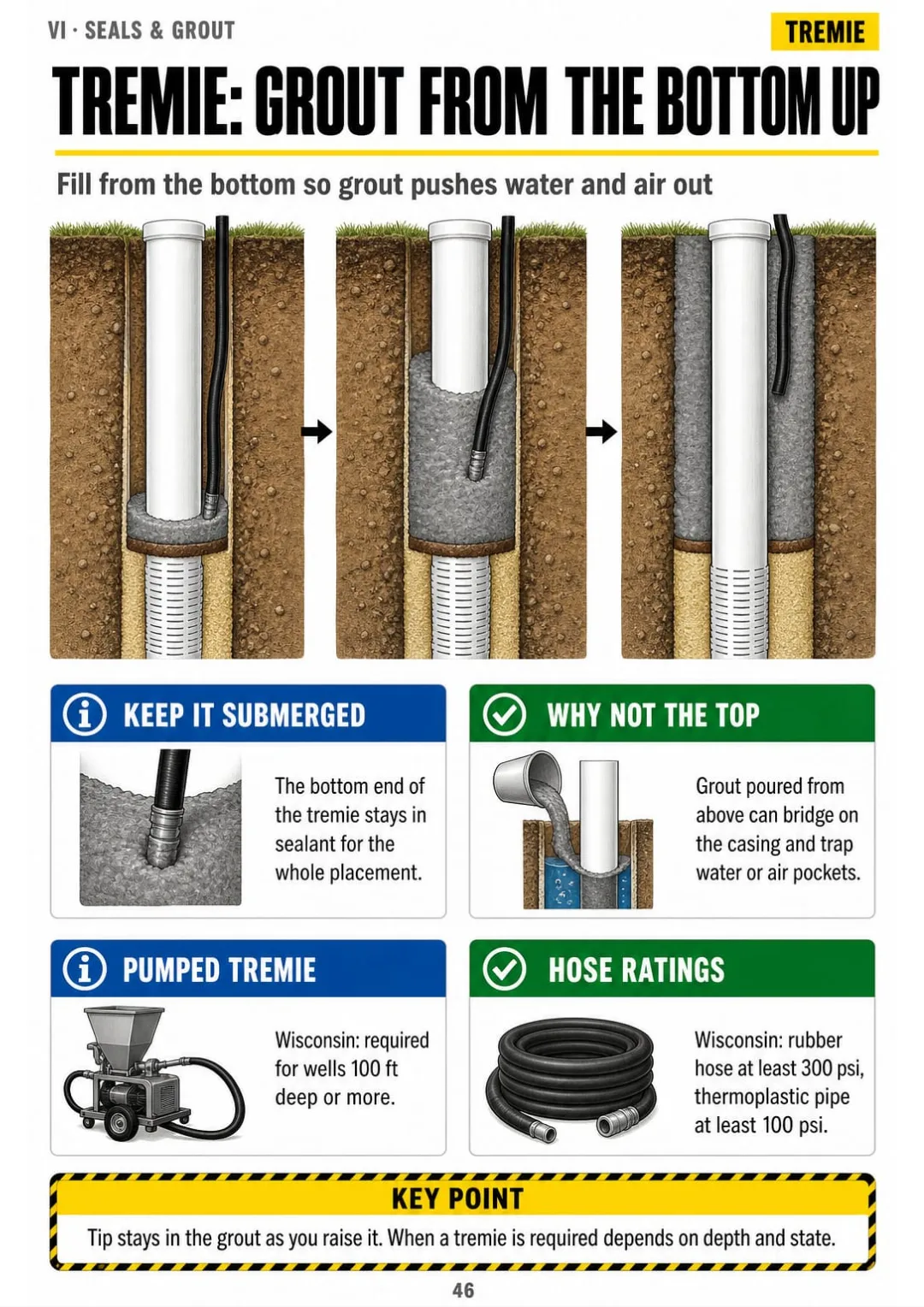
Tremie tip stays submerged from seal to surface; Wisconsin requires a pumped tremie at 100 ft or deeper.
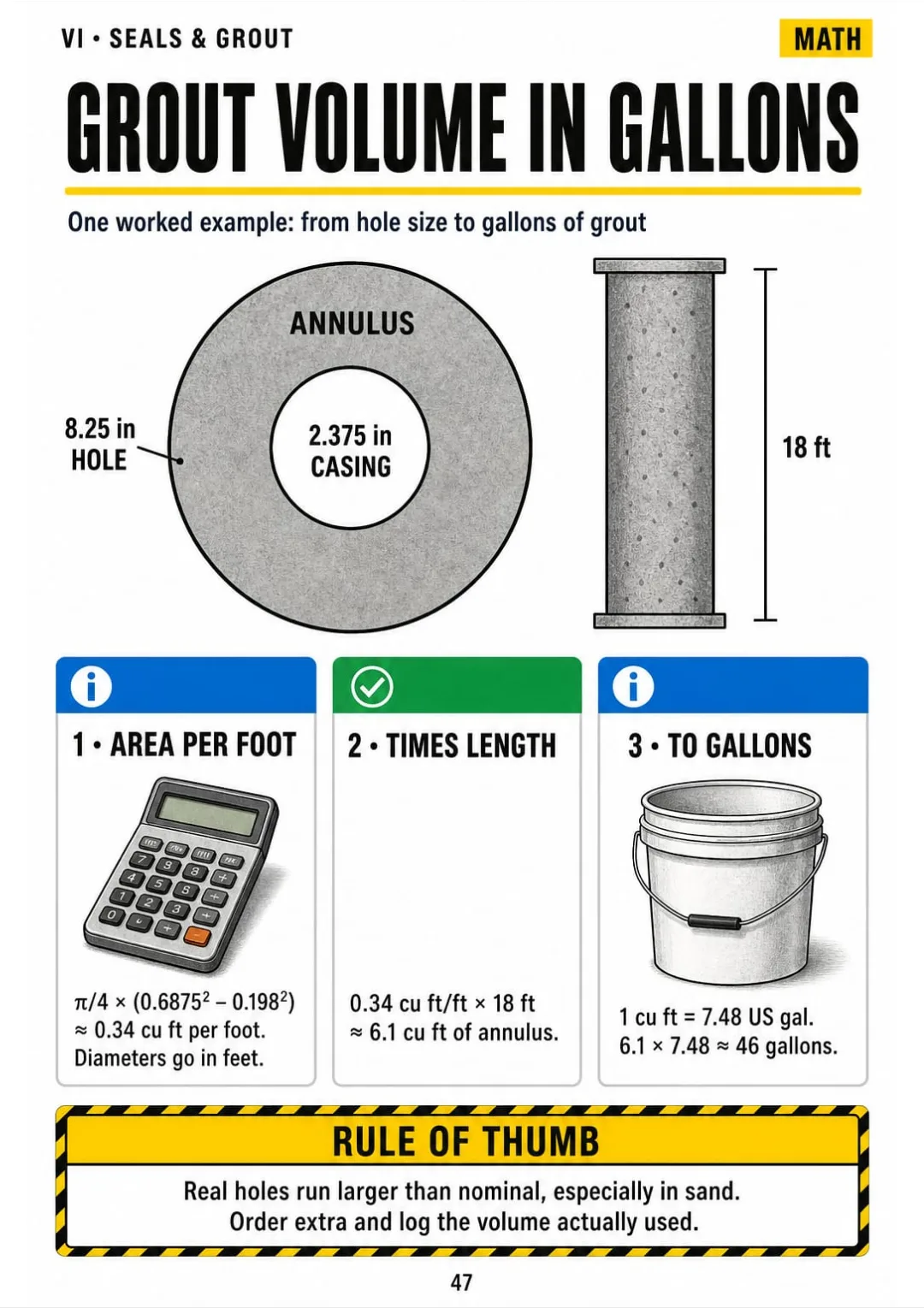
18 ft of annulus, 8.25-in hole, 2.375-in casing ≈ 6.1 cu ft ≈ 46 gallons, plus extra.
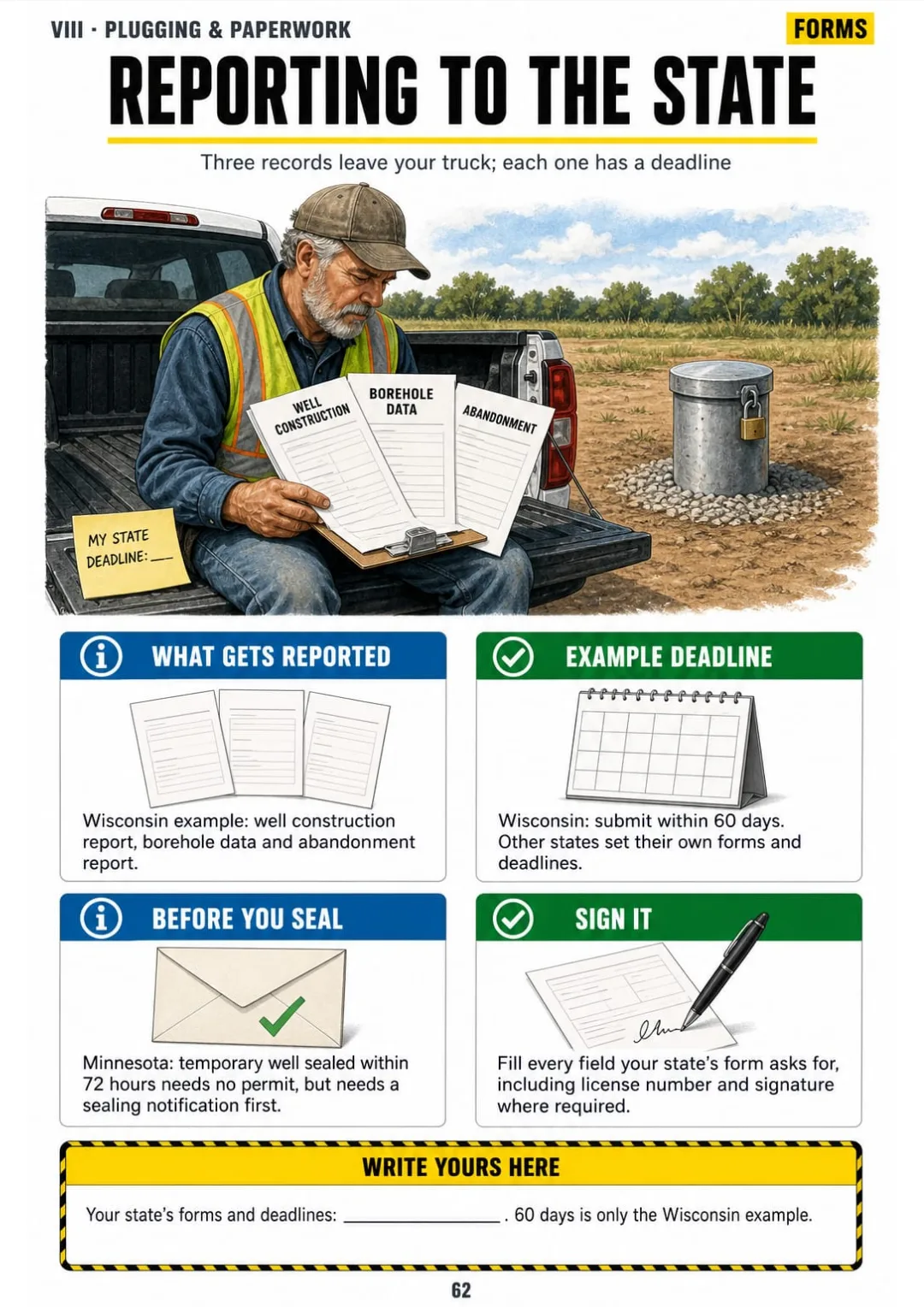
Wisconsin example: construction, borehole and abandonment reports within 60 days.
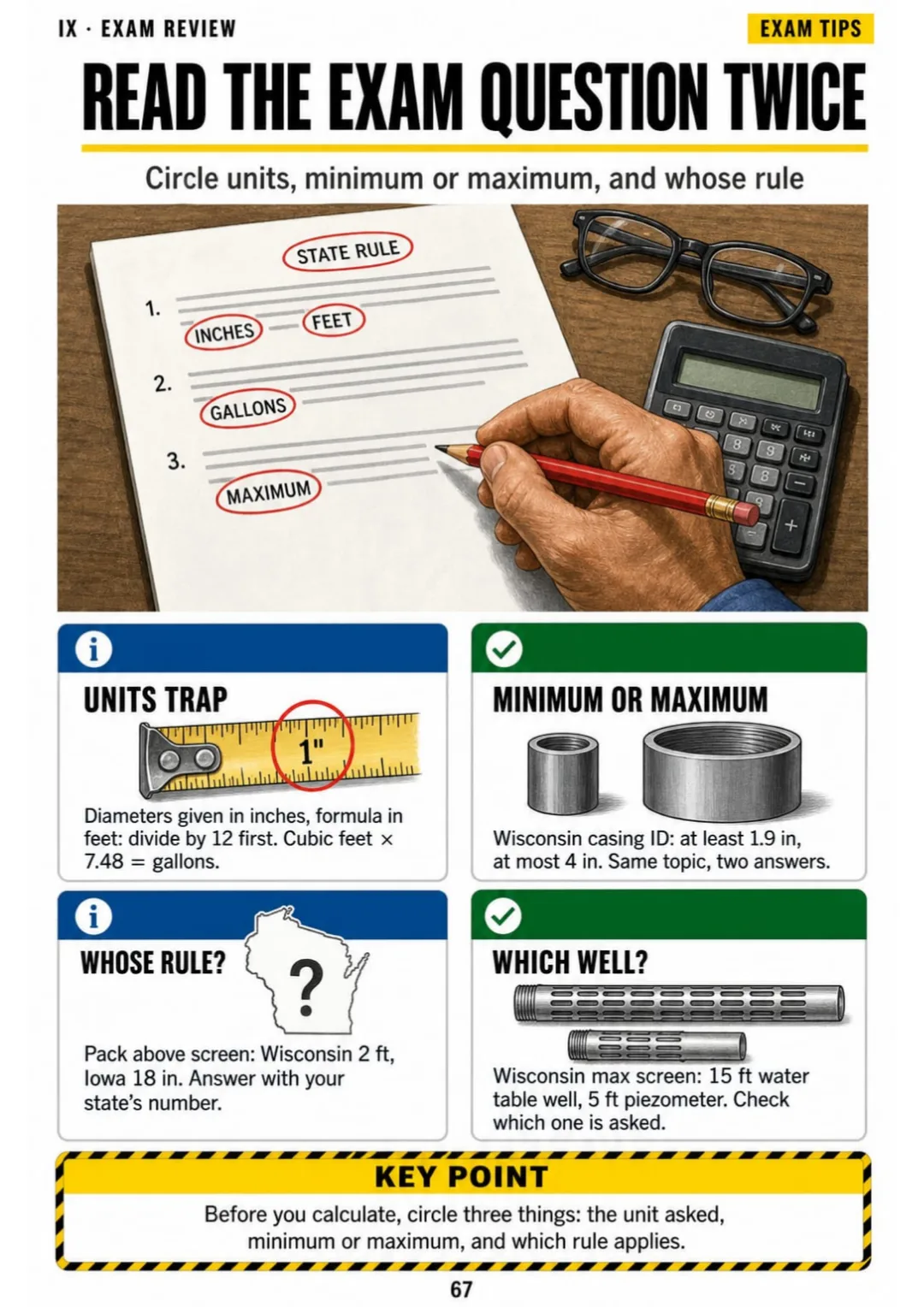
Worked traps: inches vs feet, gallons vs cubic feet, minimum vs maximum, state rule.
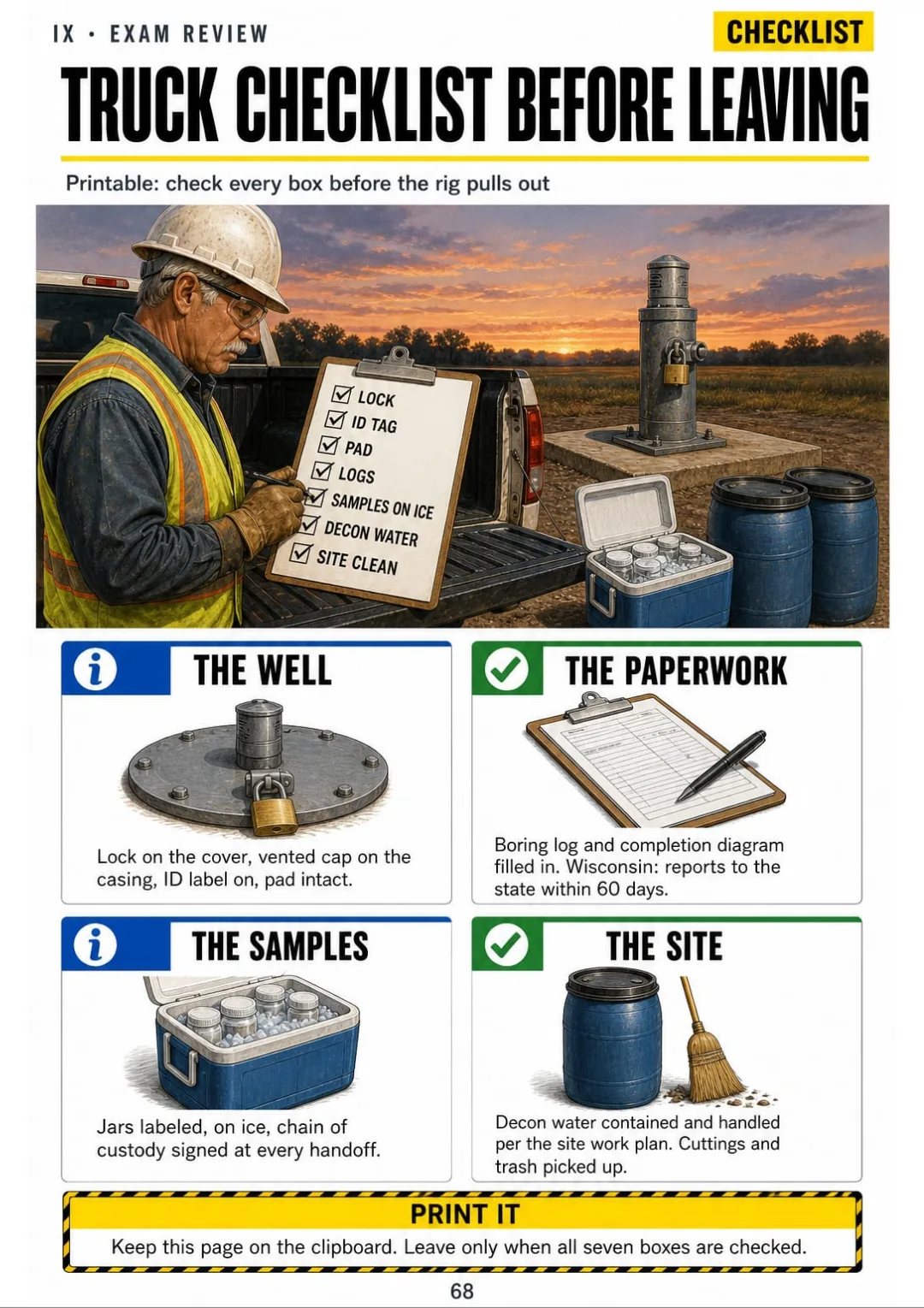
Lock, ID tag, pad, logs, samples on ice, decon water, site clean: printable checklist.

Swipe to see more →

These are real pages from the book. The table of contents is the full one: 9 parts and 64 topics.

The Problem Isn't You. It's How It Was Explained to You.

You're pouring filter sand around a 2-inch well and you sound the annulus. The weighted tape stops several feet higher than it should. Is the sand hung up, or did you miscount the bags?

The manual covers bridging in a couple of dense paragraphs: annular space, pour rate, sounding, tremie. You read them last week. On the rig, with the geologist watching, none of it comes back in order.

Slot number = thousandths of an inch: 10-slot is 0.010 in, 20-slot is 0.020 in.

In the book, bridging is one page: the hole in cross-section, the sand hung up in the annulus above the screen, the empty gap below it, and the tape stopping high. You see where the sand stuck, and why you sound every lift.

The bentonite seal above the sand, tremie grouting, grout volume in gallons, the flush-mount completion and the decon sequence work the same way: each one has its own page.

Next time the tape stops high, you know what it's telling you and what comes next, without going back to the manual.

COMPARE FOR YOURSELF

The Same Topic, Two Ways to Study It

THIS
  • The manual: line after line of text
  • Blow counts explained only in words
  • You walk into the exam still unsure
In this test, a split-barrel sampler is driven into the soil at the bottom of the hole with a hammer of a set weight dropped from a set height. Blows are counted over three six-inch intervals of penetration. The count for the first interval is only used to seat the sampler and is therefore disregarded, while the counts for the remaining two intervals are added together and written on the log as the N value, in blows per foot.
FOR THIS
  • The split-spoon drive in one drawing
  • The 6-inch counts and the N value in a box
  • 4-7-9 on the log: you write N = 16
N value: 2nd + 3rd 6-in counts. 4-7-9 → N = 16.
CONTENTS

Take a Look at the 9 Parts and 64 Topics

The monitoring well at a glance, the prep before the rig moves, drilling methods, sampling and logging, building the well, seals and grout, development, plugging and paperwork, and exam review: 68 pages, all illustrated

IThe Monitoring Well at a Glance · pp. 5-10
  1. A Monitoring Well Is Not a Water Well
  2. The Whole Well, Bottom to Top
  3. Who's on the Site and What They Ask You
  4. Where Your License Fits
  5. Reading the Groundwater Picture
  6. Floaters and Sinkers: LNAPL and DNAPL
IIBefore the Rig Moves · pp. 11-17
  1. Call 811 and Clear the First Feet
  2. Overhead Lines and Mast Clearance
  3. Working on a Contaminated Site
  4. PPE and Air Monitoring at the Borehole
  5. Decon Sequence for Sampling Tools
  6. Decon for Augers, Rods and the Rig
  7. Permits, Well Numbers and Setbacks
IIIDrilling Methods · pp. 18-25
  1. Hollow-Stem Auger: How It Works
  2. Heaving Sands in the Augers
  3. Direct Push: Probing Without Cuttings
  4. Sonic Drilling: Vibration and Continuous Core
  5. Mud Rotary and Air Rotary on a Monitoring Job
  6. Three Rigs Side by Side
  7. Borehole Size vs Casing Size
  8. Refusal, Lost Circulation and Other Problems
IVSampling and Logging the Ground · pp. 26-33
  1. The Split-Spoon Sampler
  2. Counting Blows: The N Value
  3. Shelby Tubes and Core Liners
  4. Recovery and Depth on the Log
  5. Describing Soil by Eye: Grain Size
  6. Color, Moisture and Density
  7. Screening Samples with the PID
  8. Sample Jars, Labels and Chain of Custody
VBuilding the Well · pp. 34-42
  1. Casing and Screen Materials
  2. Screen Slot Size Explained
  3. Matching Sand Pack to Slot
  4. Screen Length and Placement
  5. End Cap, Sump and Centralizers
  6. Setting the String in the Hole
  7. Placing the Filter Pack
  8. Bridging: Sand Hung Up in the Annulus
  9. Filter Pack Volume in Cubic Feet
VISeals, Grout and the Surface · pp. 43-50
  1. The Bentonite Seal Above the Sand
  2. Hydrating Bentonite Above the Water Table
  3. Annular Grout: Cement or Bentonite
  4. Tremie Pipe: Grout From the Bottom Up
  5. Grout Volume in Gallons
  6. Stick-Up Completion
  7. Flush-Mount Completion
  8. Measuring Point and Well ID
VIIDevelopment and Water · pp. 51-57
  1. Why You Develop a New Well
  2. Surge Block, Bailer and Pump
  3. When Development Is Done
  4. Well Volume in Gallons
  5. Measuring Water Level
  6. Interface Probe for Product
  7. Purging Before Sampling: Volume vs Low-Flow
VIIIPlugging and Paperwork · pp. 58-62
  1. When a Well Must Be Abandoned
  2. Plugging a Well Step by Step
  3. The Boring Log
  4. The Well Completion Diagram
  5. Reporting to the State
IXExam Review and Field Checklists · pp. 63-68
  1. The Whole Build in 10 Steps
  2. The Numbers to Know
  3. Most Frequent Mix-Ups
  4. Most Frequent Field Errors
  5. Read the Exam Question Twice
  6. Truck Checklist Before Leaving the Site

One Page, One Topic, All Clear

Think of it this way:

You're on a gas station site, the screen is set, and the geologist asks how high the sand goes and where the seal starts. The whole crew waits for your answer.

You open the page of the well completion diagram and see the well in cross-section: screen, sand pack above it, fine sand, bentonite seal and grout to the surface, each layer labeled with its depth.

18 ft of annulus, 8.25-in hole, 2.375-in casing ≈ 6.1 cu ft ≈ 46 gallons, plus extra.

Same with the split-spoon and the N value, the tremie pipe, grout volume in gallons, developing with a surge block and plugging a well: each one on its own page.

Monitoring Well Drilling Illustrated is 9 parts and 64 topics, all drawn, and at the end the whole build in 10 steps, the numbers to know and a truck checklist.

What you see drawn, you don't have to memorize.

What's Inside Monitoring Well Drilling Illustrated:

Ipp. 5-10

The Monitoring Well at a Glance

Why a monitoring well isn't a water well, the whole well bottom to top, who's on site and what they ask you, where your license fits, the groundwater picture, LNAPL and DNAPL.

IIpp. 11-17

Before the Rig Moves

Calling 811 and clearing the first feet, overhead lines, contaminated sites, PPE and air monitoring, decon for sampling tools and for the rig, permits, well numbers and setbacks.

IIIpp. 18-25

Drilling Methods

Hollow-stem auger, heaving sands, direct push, sonic, mud and air rotary, three rigs side by side, borehole vs casing size, refusal and lost circulation.

IVpp. 26-33

Sampling and Logging the Ground

The split-spoon, blow counts and the N value, Shelby tubes and liners, recovery, describing soil by eye, color and moisture, PID screening, jars and chain of custody.

Vpp. 34-42

Building the Well

Casing and screen materials, slot size, matching sand to slot, screen placement, end cap and centralizers, setting the string, placing the filter pack, bridging and pack volume. When the tape stops high, you know why and what comes next.

VIpp. 43-50

Seals, Grout and the Surface

The bentonite seal, hydrating above the water table, cement or bentonite grout, the tremie pipe, grout volume in gallons, stick-up and flush-mount completions, measuring point and well ID.

VIIpp. 51-57

Development and Water

Why and how you develop a new well, when it's done, well volume in gallons, water levels, the interface probe, and purging: volume vs low-flow.

VIIIpp. 58-62

Plugging and Paperwork

When a well must be abandoned, plugging step by step, the boring log, the well completion diagram and reporting to the state.

IXpp. 63-68

Exam Review and Field Checklists

The whole build in 10 steps, the numbers to know, the most frequent mix-ups and field errors, reading the exam question twice and the truck checklist.

At the end of the book: The whole build in 10 steps, the numbers to know, the most frequent mix-ups and a truck checklist.

Plus: 2 Free Books

Monitoring Well Exam Practice: Questions with Answers

BONUS 1: «Monitoring Well Exam Practice: Questions with Answers»

Value on its own: US$ 17.90

Exam-style questions grouped by topic, each answer pointing back to the page with the drawing, so you find what you still mix up before test day.

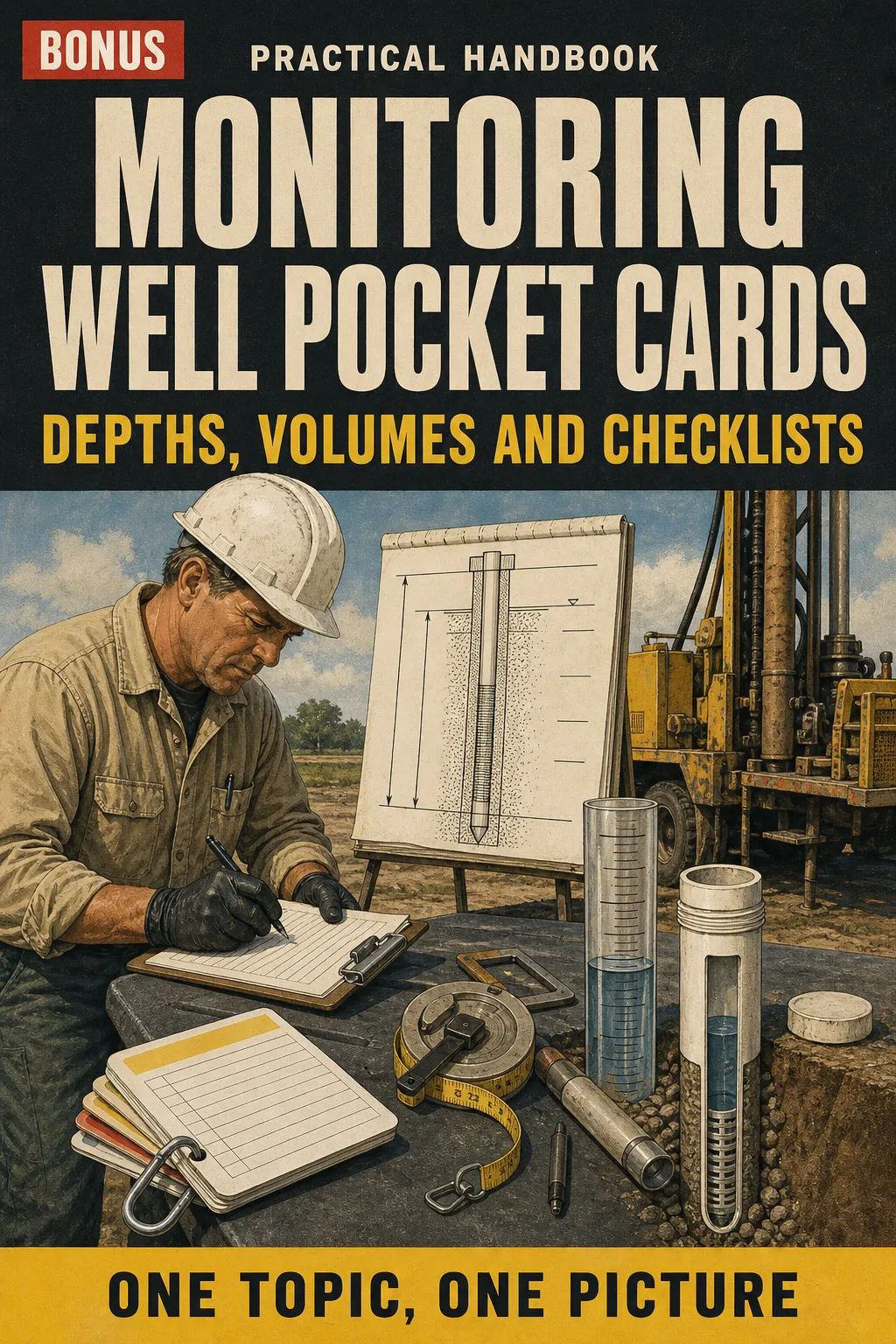
Monitoring Well Pocket Cards: Depths, Volumes and Checklists

BONUS 2: «Monitoring Well Pocket Cards: Depths, Volumes and Checklists»

Value on its own: US$ 14.90

The numbers and sequences you need on one card each, from filter pack height to the decon sequence, ready to print and keep in the truck.

Monitoring Well Drilling Illustrated with 2 Free Books

  • Monitoring Well Drilling Illustrated: 68 illustrated pagesUS$ 63
  • BONUS 1: Monitoring Well Exam Practice: Questions with AnswersUS$ 17.90
  • BONUS 2: Monitoring Well Pocket Cards: Depths, Volumes and ChecklistsUS$ 14.90
  • High-resolution PDF to printIncluded
Total value US$ 95.80
YOUR PRICE:
US$ 27
You save US$ 68.80
YES, I WANT MONITORING WELL DRILLING ILLUSTRATED FOR US$ 27

📄 This is a digital PDF book sent to your email: nothing is printed or shipped.

Secure purchaseEncrypted payment30-day guarantee

PDF by email: We email you Monitoring Well Drilling Illustrated as a PDF, together with the two free books. It's a single payment: no installments, no extra charges.

Who This Book Is For

You're the helper on an environmental rig

You're the helper on an environmental rig

See every step your driller does, in build order, one drawing per page, so you know what comes next before he asks.

Your state license exam is coming up

Your state license exam is coming up

Review part by part, then check yourself with the practice questions: each answer points back to the page with the drawing.

You drill water wells and now work environmental jobs

You drill water wells and now work environmental jobs

You already know the rig. The book shows the environmental side: sand pack, seal, grout, decon and paperwork, ready to print for the truck.

Everything You Get Today

US$ 95.80US$ 27
YES, I WANT MONITORING WELL DRILLING ILLUSTRATED FOR US$ 27

📄 This is a digital PDF book sent to your email: nothing is printed or shipped.

30DAYS
GUARANTEE

30-Day Guarantee

Try Monitoring Well Drilling Illustrated for 30 days, bonus books included.

We refund everything if the file won't open, if the book isn't what you see here, if you were charged twice or if the email doesn't arrive. Just email us.

You pay once. No subscriptions.

Frequently Asked Questions

Is it for me if I've drilled water wells for years and now work environmental sites?

Yes. It isn't a beginner's book: it skips what you already know about the rig and draws the environmental side, from sampling and logging to sand pack, seals, grout, development and plugging.

Does it work for my state's exam, and where does the content come from?

It covers what monitoring well and environmental drilling exams have in common: drilling, sampling, building, sealing, developing and plugging the well. It's built from state well construction rules, cross-checked against ASTM D5092 and U.S. EPA groundwater monitoring guidance. Seal thickness, grout depths and setbacks change by state, so every state-specific number is marked to check against your state's current rule. Pumps and water-supply-only topics of the general exam are not covered.

Is this official material?

No. It's an independent illustrated study book. It isn't published, approved or endorsed by any state agency, licensing board or exam provider.

Does it replace a course or on-the-job training?

No. It helps you review and understand each step, but it doesn't replace required training, supervised field experience or your state's rules. It doesn't give a certificate or continuing education credit.

Are the practice questions the ones on the exam?

No. They're written for this book, grouped by topic and modeled on what's covered in the exam material, not copied from any real exam.

When and how do I get it?

The book and the 2 bonus books come as PDFs by email, to the address you enter at checkout.

Do I have to pay every month?

No. It's a one-time payment. No subscription.

Can I have it on paper?

Yes. It's a printable PDF: print the whole book or just the pages and pocket cards you want in the truck.

How does the refund work?

You have 30 days. We refund everything if the file won't open, if the book isn't what you see on this page, if you were charged twice or if the email doesn't arrive: just email us.

Before You Close This Page

No more rereading the code and keeping nothing.

The sand pack, the seal and the grout: you see them drawn, and that's it.

You walk into the exam knowing where every piece of the well goes.

Drawings make studying faster.

The book is right below.

One-time payment: US$ 27 · Guarantee: 30 days · PDF by email

YES, I WANT MONITORING WELL DRILLING ILLUSTRATED FOR US$ 27

📄 This is a digital PDF book sent to your email: nothing is printed or shipped.